
Film Negative Scanner USB 2.0 Slide Viewer Photo Converter with 14MP CMOS Sensor and 2.4-inch Colour LCD Screen for 135mm, 126KPK, 110, Super 8 Films and Monochrome Slides with Built-in 128MB Memory and SD Card Slot


Film Negative Scanner USB 2.0 Slide Viewer Photo Converter with 14MP CMOS Sensor and 2.4-inch Colour LCD Screen for 135mm, 126KPK, 110, Super 8 Films and Monochrome Slides with Built-in 128MB Memory and SD Card Slot
14MP Film Negative Scanner and Slide Viewer with USB 2.0 and 2.4-Inch Colour LCD Screen

This film scanner and slide viewer provides a dedicated hardware solution for converting physical photographic negatives and slides into digital JPEG files. It is designed for photographers, archivists, or anyone wishing to preserve old 135mm, 126KPK, 110, and Super 8 film formats without relying on third-party scanning services. The core of the device is a 14.0-megapixel (4416x3312 resolution) 1/2.33-inch CMOS image sensor, which captures detail from your film strips. For situations demanding higher output resolution, the scanner can interpolate images up to 22 megapixels. Operation is straightforward: the unit connects to your computer via USB 2.0 and functions as a standard USB Mass Storage Device Class (MSDC), allowing for simple drag-and-drop file management once images are scanned and saved to the internal memory or an SD card.
Features and Construction
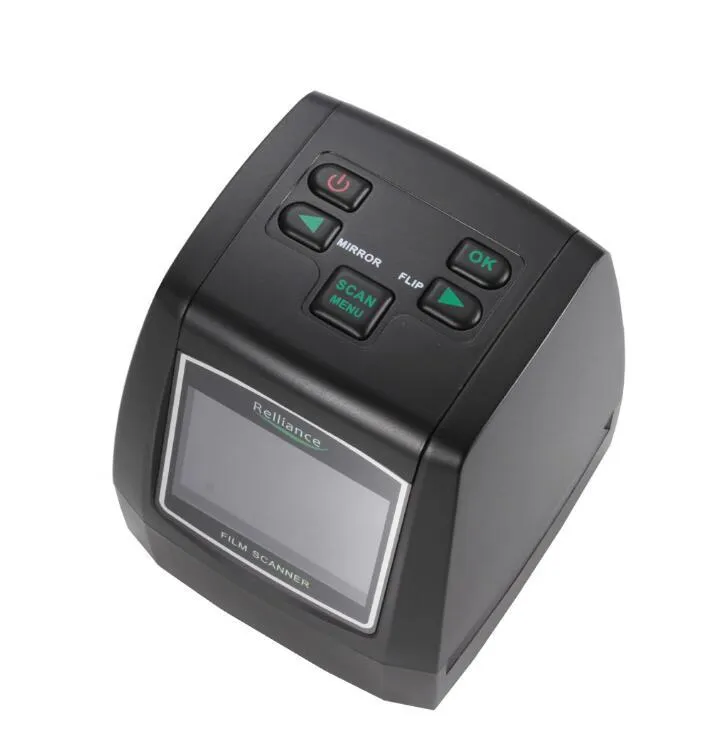
The scanner combines imaging hardware with practical controls for reviewing and adjusting your digitised photos before final saving. Its compact form factor, measuring 87mm long by 86.5mm wide by 102.5mm high and weighing 250g, makes it a portable option for home or office use.
Material and Build
The device is built around its core imaging components: the 1/2.33-inch CMOS sensor and the 2.4-inch TFT LCD colour screen. The housing is designed to accept various film holders for the supported formats. Construction focuses on secure film placement during the scanning process to ensure accurate alignment and image capture. The interface includes physical controls, likely for menu navigation, exposure adjustment, and scan initiation, all geared towards a self-contained scanning workflow.
Size and Practical Fit
With dimensions of 87 x 86.5 x 102.5mm, the scanner has a small footprint suitable for a desk or workspace. Its 250g weight adds to its portability. The design accommodates the optical path for the sensor and the integrated 2.4-inch preview screen. This screen is a key feature, allowing you to check the scan quality, apply picture effects like black and white conversion, and decide whether to save the image without first transferring it to a computer.
Uses and Placement

This converter is aimed at users with collections of physical film negatives or slides who need a direct, hardware-based method for digitisation. It serves both personal archiving projects and more organised cataloguing tasks.
Event or Professional Use
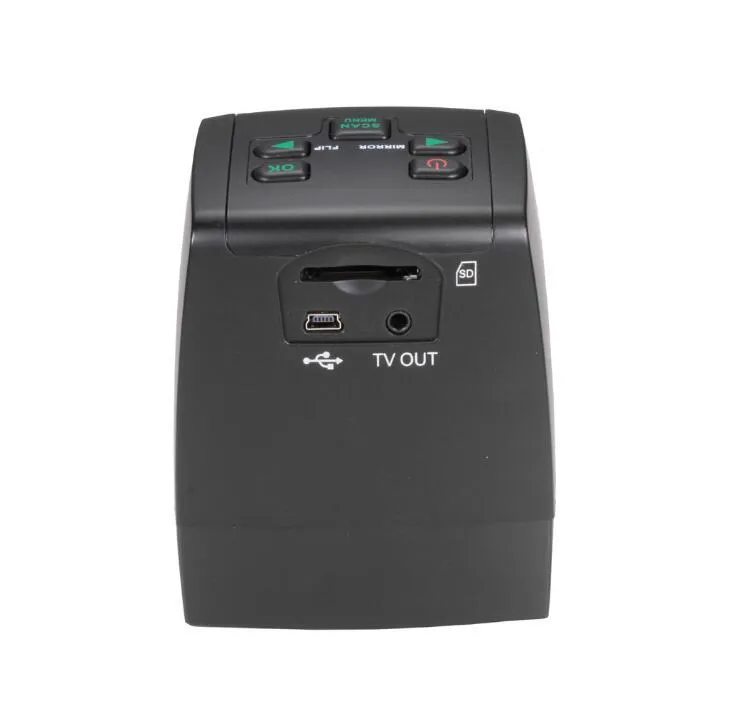
While not a high-volume professional film scanner, this device can be useful for photographers needing quick digital references from film shots, for small studios digitising client archives, or for educational purposes where film photography is taught. The support for multiple formats—from standard 135mm to smaller 110 and Super 8 cine film—makes it versatile for handling different types of media found in mixed collections. The TV-OUT (NTSC/PAL) function could allow for showing scanned images directly on a television, potentially useful for presentations or group viewing.
Everyday Home Use
For home users, it offers a way to preserve family memories stored on old film rolls and slides, converting them into digital JPEGs that can be easily shared online, printed, or backed up. The automatic exposure control and white balance simplify the process for those less familiar with manual photo adjustments, while the manual EV compensation (-2.0 to +2.0) provides control when needed. The multi-language interface (including English, French, German, Italian, Spanish, Japanese, and Chinese variants) broadens its accessibility in different regions.
Benefits and Buying Value
The value lies in having a dedicated, always-available tool for film digitisation at home, bypassing the cost and wait time of external scanning services. It consolidates several functions—scanning, previewing, and basic file storage—into one compact unit.
Reuse and Low Maintenance
The scanner is designed for repeated use on personal film collections. Its low-maintenance operation relies on the USB connection for power and data, or an optional DC 5V adapter. There are no consumables like ink or special paper required. The built-in 128MB memory provides immediate storage, and the expandable SD card slot (supporting cards up to 32GB) allows for extensive project work without needing to constantly connect to a computer. Compatibility with older Windows systems (XP, Vista) as well as newer ones (7, 8) and Mac OS 10.7.3+ ensures it can work with a wide range of existing computers.
Why Choose This Product
This film scanner and slide viewer is a practical choice for its specific combination of a 14MP sensor, integrated colour preview screen, and multi-format support. It differs from flatbed scanners with film adapters by being a purpose-built device for film strips and slides, often with a more straightforward setup. The key differentiator is the 2.4-inch LCD, which enables immediate feedback on the scan—a feature not always present on basic film converters. For users with boxes of 135mm, 126KPK, 110, or Super 8 film seeking a controlled, in-house digitisation process, this device provides a focused set of tools to begin the archiving task.
