Dali Lithium Iron Phosphate Battery Protection Board 4S 12V BMS for DIY battery packs, available in 15A to 500A current ratings with active balancing options and optional integrated cooling fan for higher power models


Dali Lithium Iron Phosphate Battery Protection Board 4S 12V BMS for DIY battery packs, available in 15A to 500A current ratings with active balancing options and optional integrated cooling fan for higher power models
Dali 4S 12V Lithium Iron Phosphate Battery Protection Board with Balancing & Fan Options
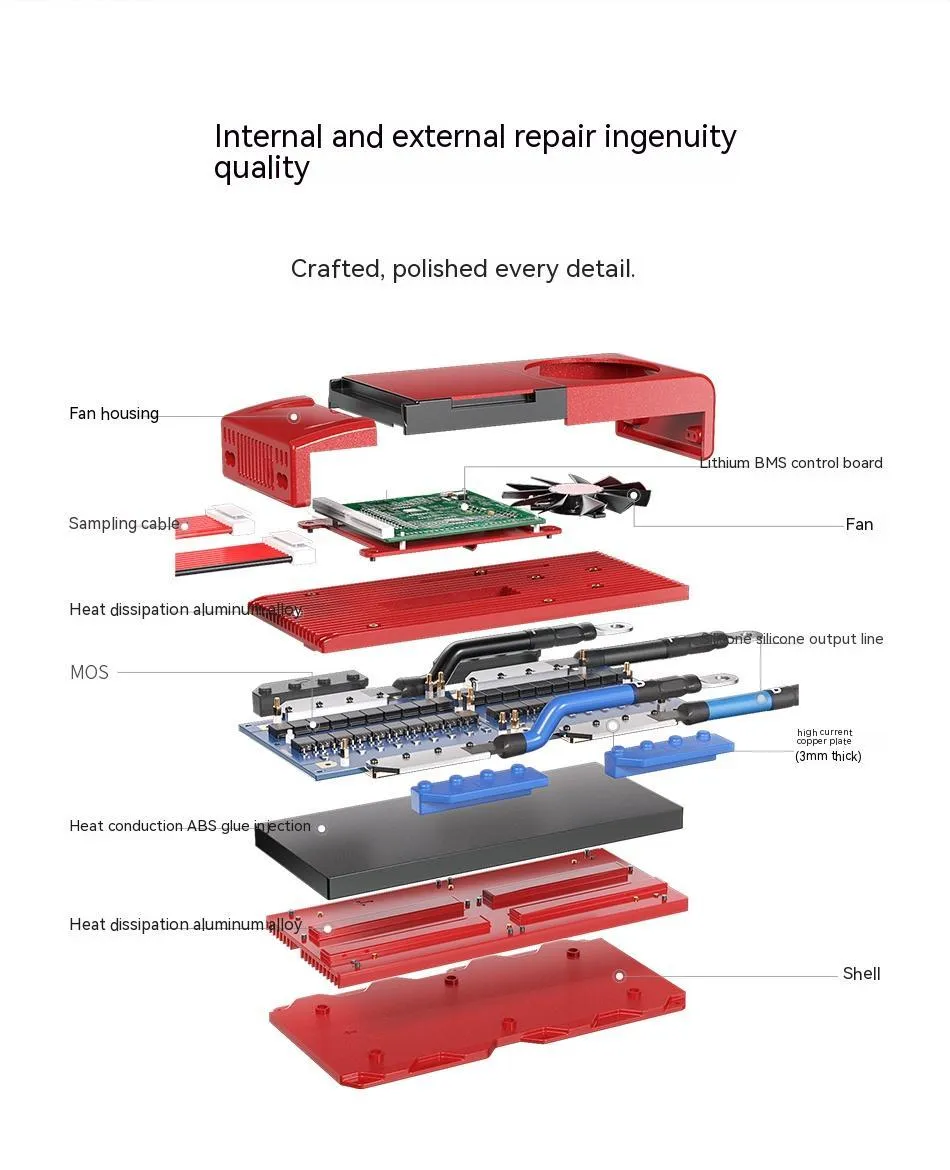
This Dali Battery Management System (BMS) is a critical component for anyone building or maintaining a 12-volt battery bank using lithium iron phosphate (LiFePO4) cells. Designed specifically for a 4-cell series (4S) configuration, it acts as the brain and guardian of your battery pack, monitoring voltage, current, and temperature to prevent dangerous conditions like overcharging, deep discharging, and short circuits. By ensuring each cell operates within its safe parameters, this board directly contributes to longer battery lifespan, reliable performance, and essential safety for applications ranging from solar energy storage and caravan power to marine use and electric mobility projects. The product is offered in a comprehensive range of current capacities and feature sets, allowing you to select the precise model that matches your system's power demands and complexity.
Product Specifications and Model Selection
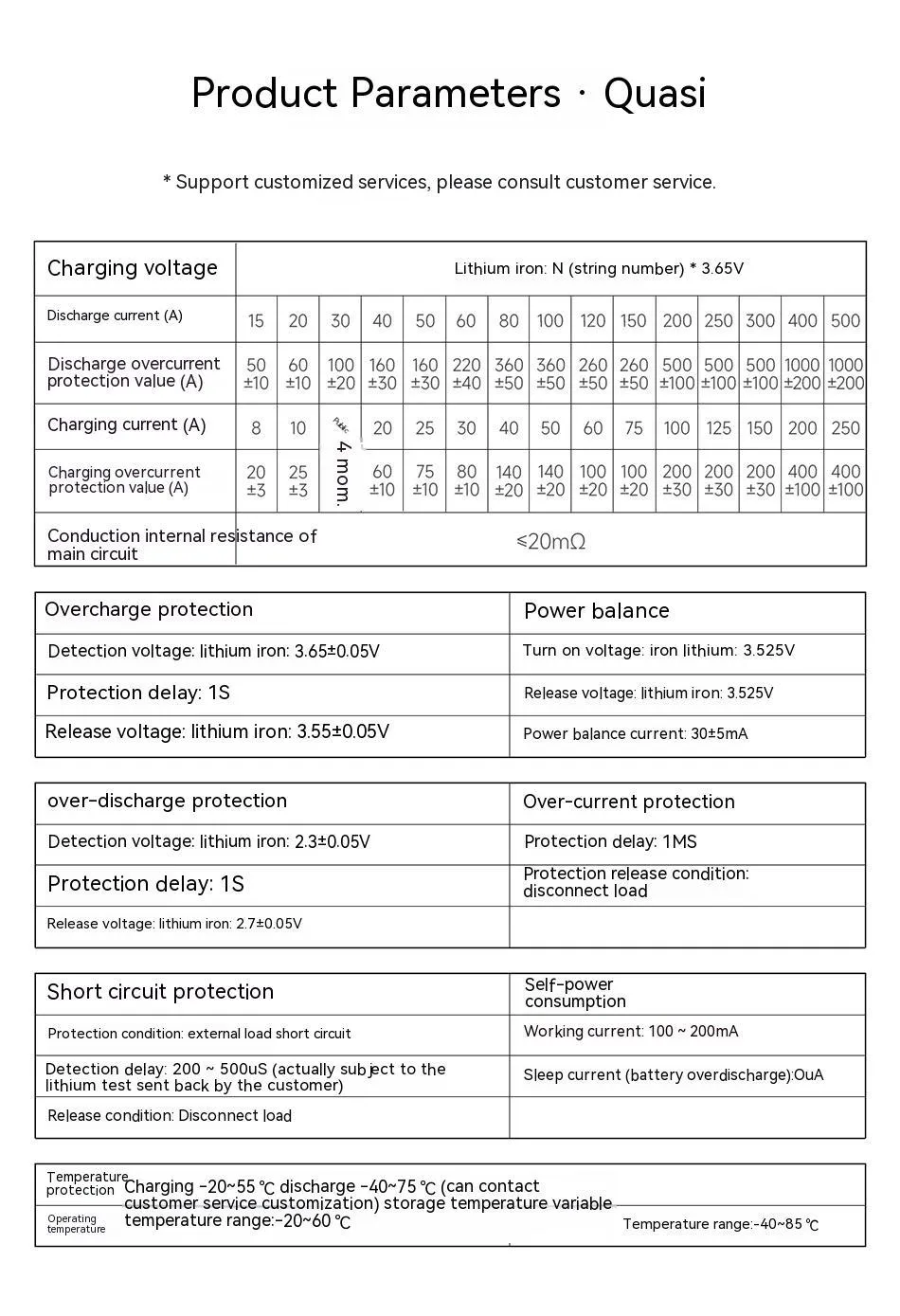
The core specification of this BMS is its support for a 4S LiFePO4 battery pack, resulting in a nominal system voltage of 12.8V (typical) or 12V. Beyond this, the key differentiator between models is the continuous current rating, which dictates how much load the BMS can safely handle. Your choice here is paramount for system safety and performance.
Current Rating and Capacity Range
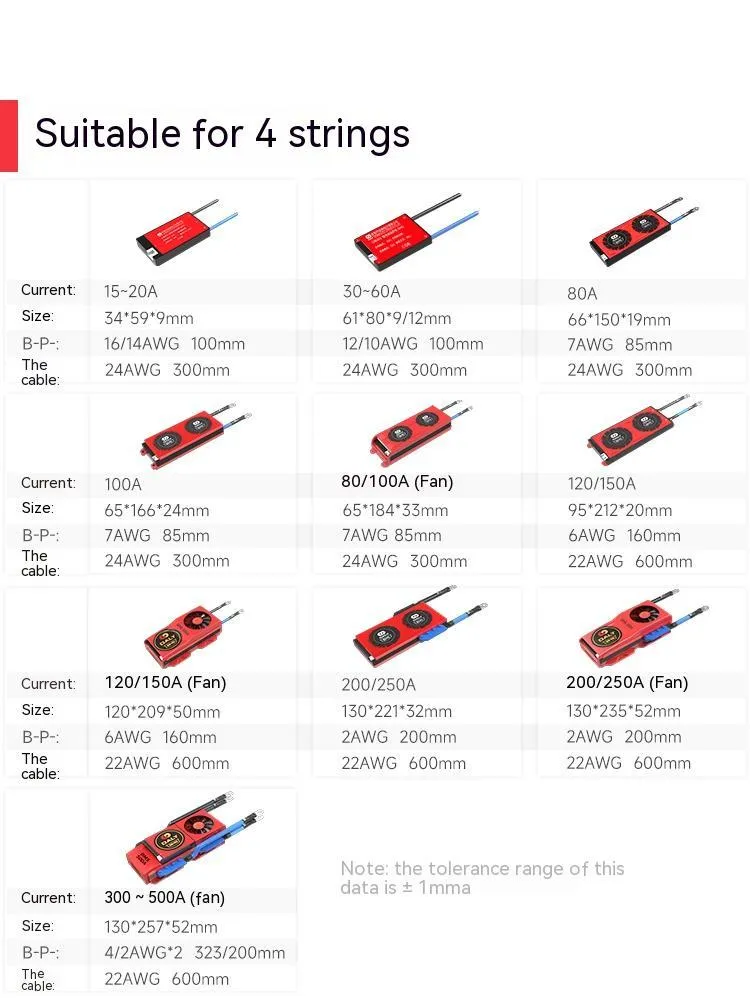
The Dali BMS is available in an extensive selection of current ratings to suit projects of all scales. The range starts at 15 Amps for lower-power applications and scales up through common ratings like 30A, 50A, 100A, and 150A, right up to high-power options of 200A, 250A, 300A, 400A, and 500A. It is crucial to select a model whose amp rating exceeds the maximum continuous current your application will draw. For example, a 1000W inverter on a 12V system could draw over 80A, necessitating at least a 100A BMS for safe, continuous operation.
Active Balancing Function
Many models within this series include an active cell balancing feature. Over time and through charge cycles, individual cells within a battery pack can develop slight voltage imbalances. An active balancer works to redistribute energy from higher-voltage cells to lower-voltage cells, maintaining pack uniformity. This function helps maximise the usable capacity of your entire battery pack and can contribute to longer overall cell life by preventing any single cell from being chronically over-stressed.
Integrated Cooling for High-Power Models
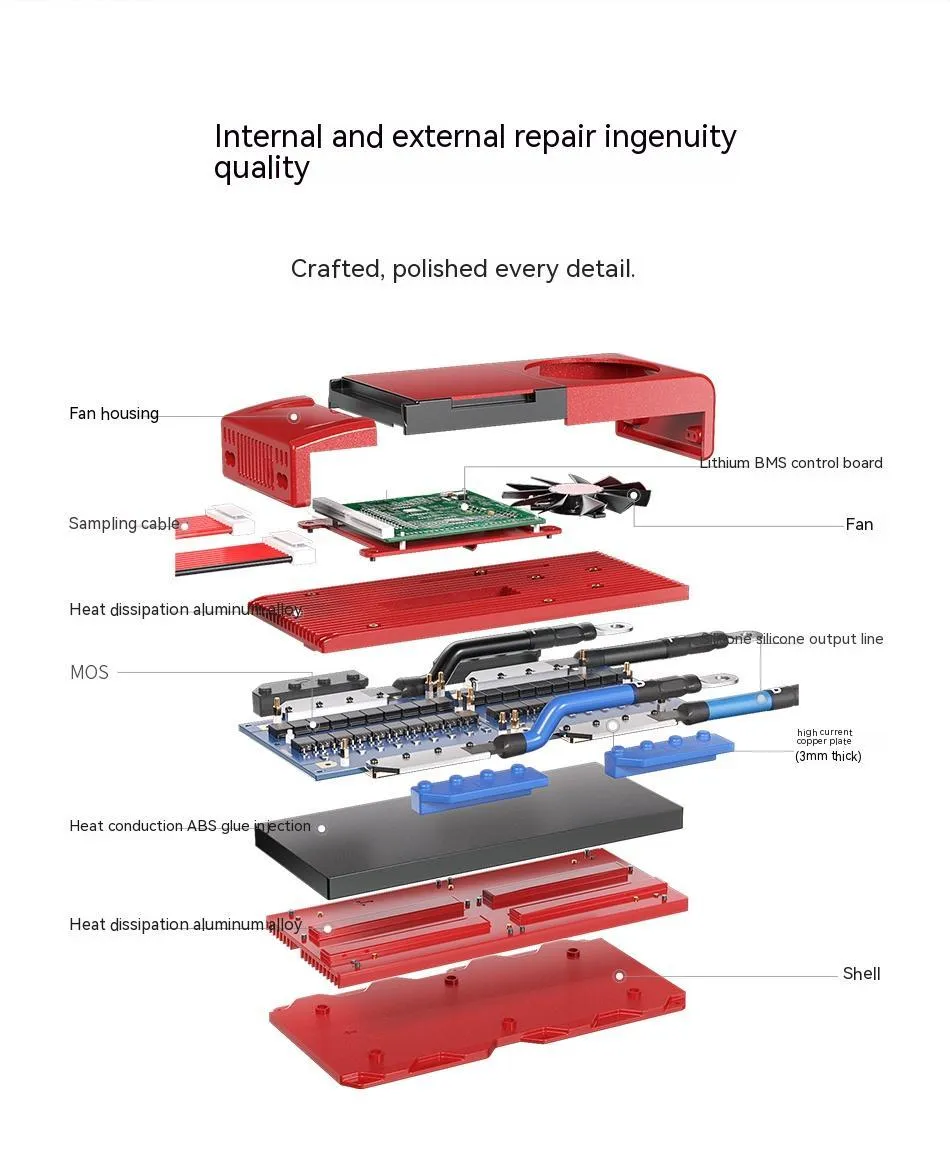
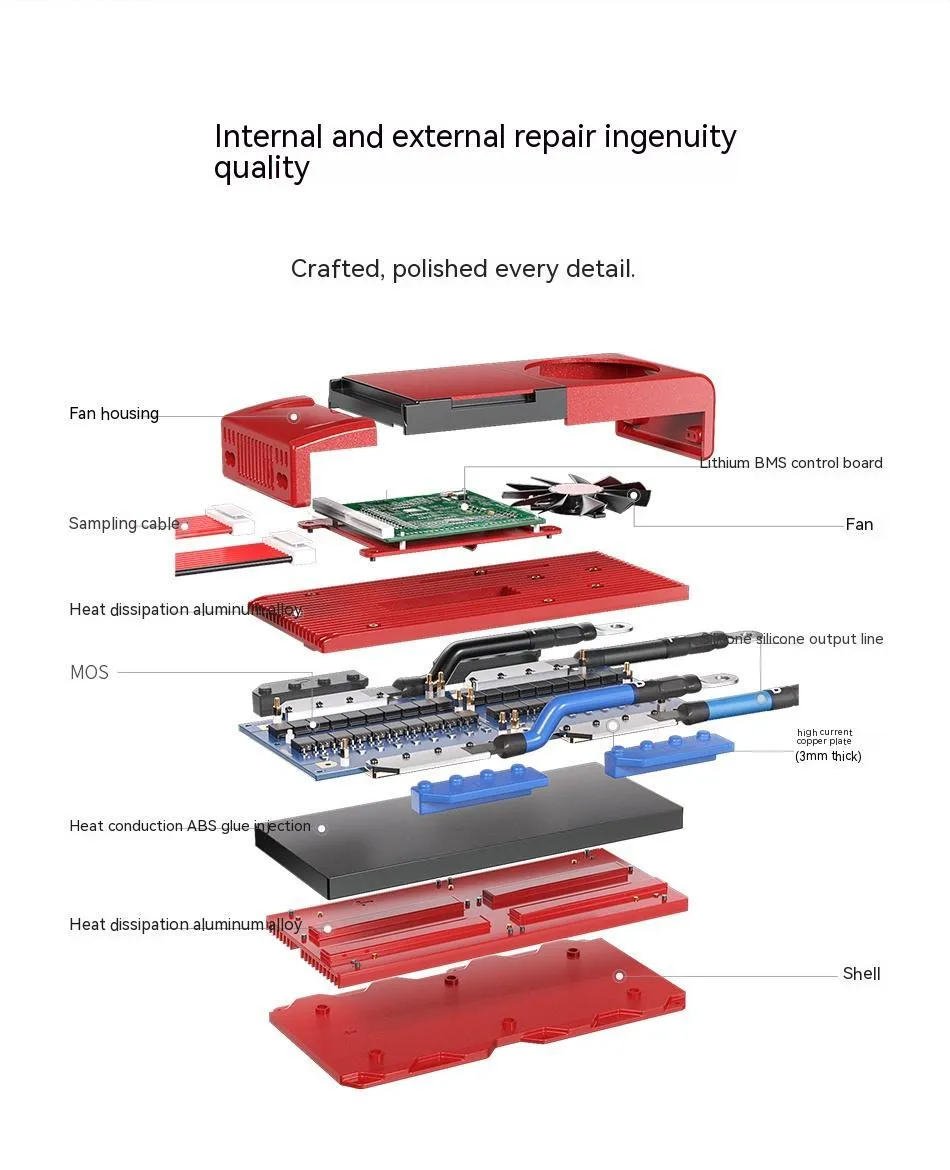
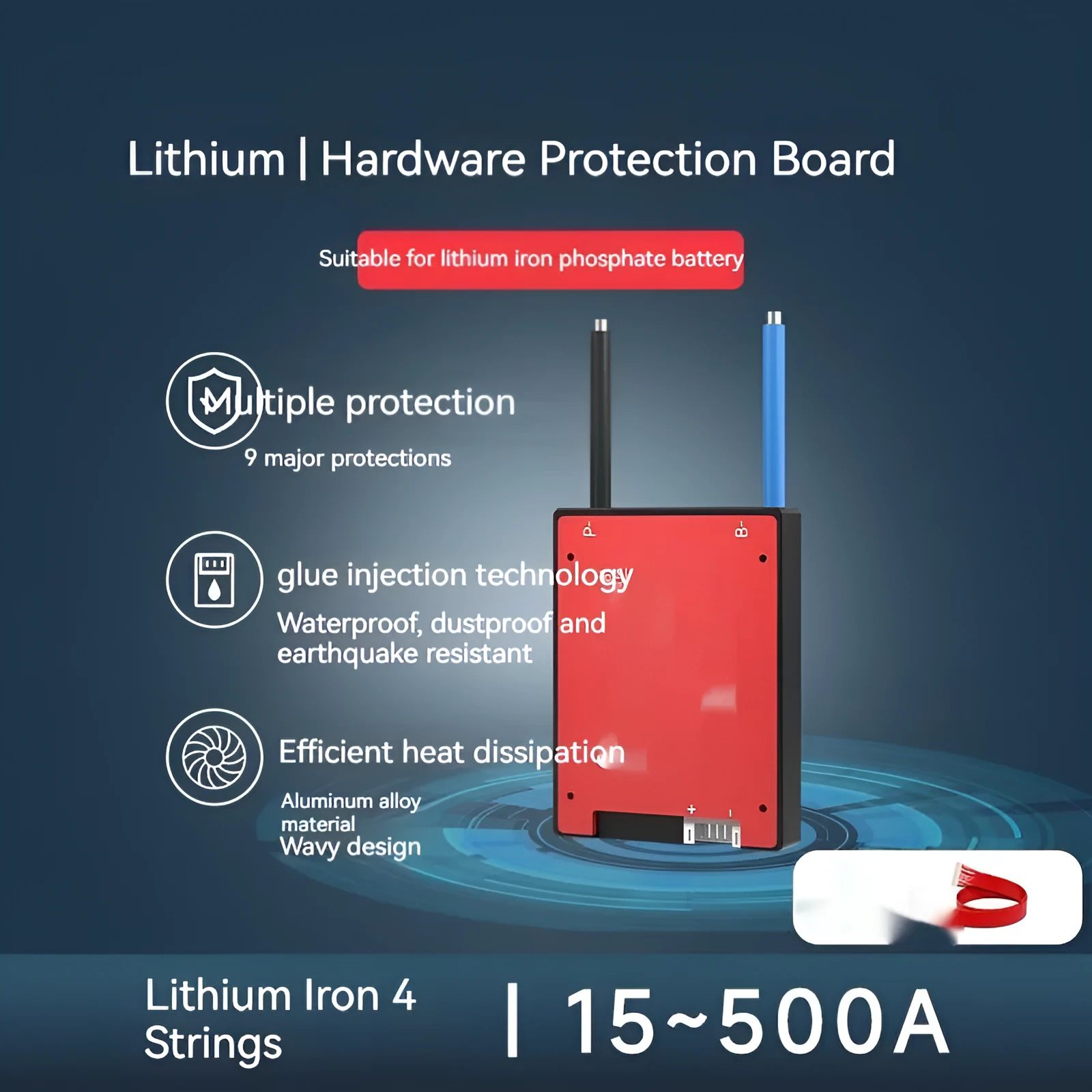
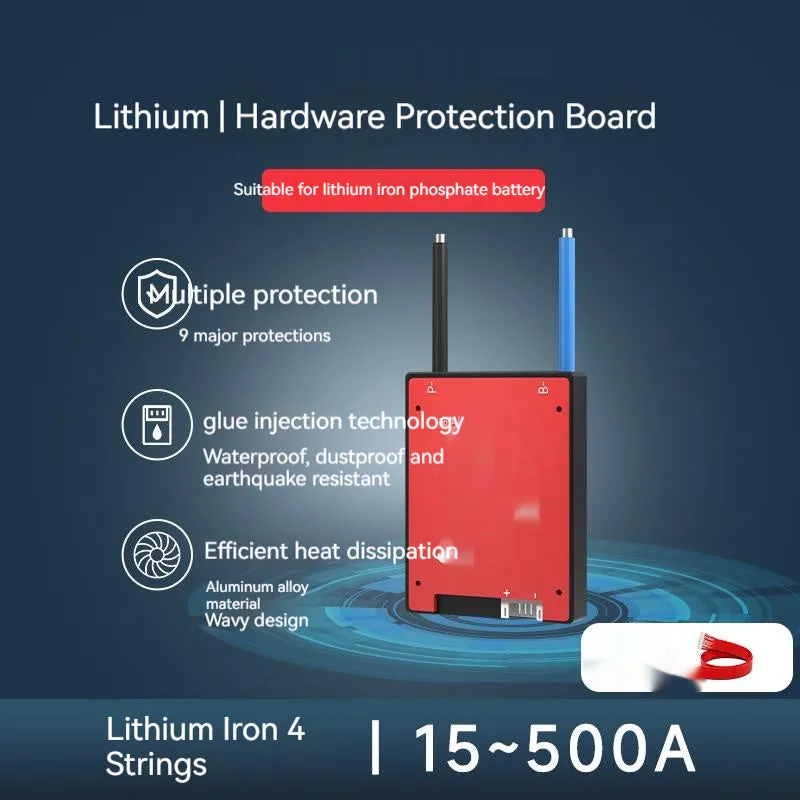
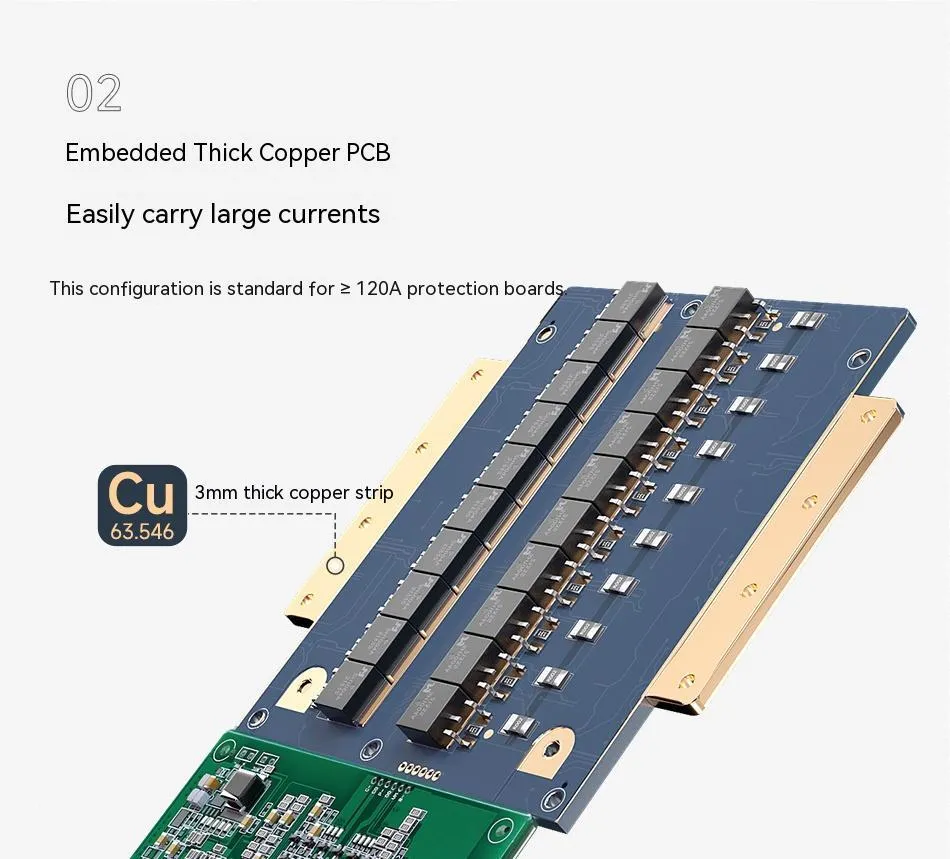
For the higher-current models, specifically those rated at 80A and above, an option with an integrated cooling fan is available. High-current operation generates significant heat within the BMS's power components (MOSFETs). The integrated fan actively dissipates this heat, allowing the BMS to sustain its rated current output for longer periods without thermal throttling or shutdown. This feature is highly recommended for demanding applications or installations where ambient temperatures might be elevated.
Key Features and Practical Benefits
This BMS integrates several standard protection features vital for any lithium battery system. Understanding these features clarifies the practical value the board adds to your DIY energy storage solution.
Core Protection Functions
The board provides a suite of essential electronic protections. Over-charge protection disconnects the charger when any cell voltage exceeds a safe maximum, preventing damage and fire risk. Over-discharge protection cuts off the load when any cell's voltage falls too low, safeguarding against irreversible cell damage. Over-current and short-circuit protection react rapidly to excessive load demands or faults, protecting both the battery and the connected equipment. These are non-negotiable safety features for responsible lithium battery use.
Same-Port Design Simplification
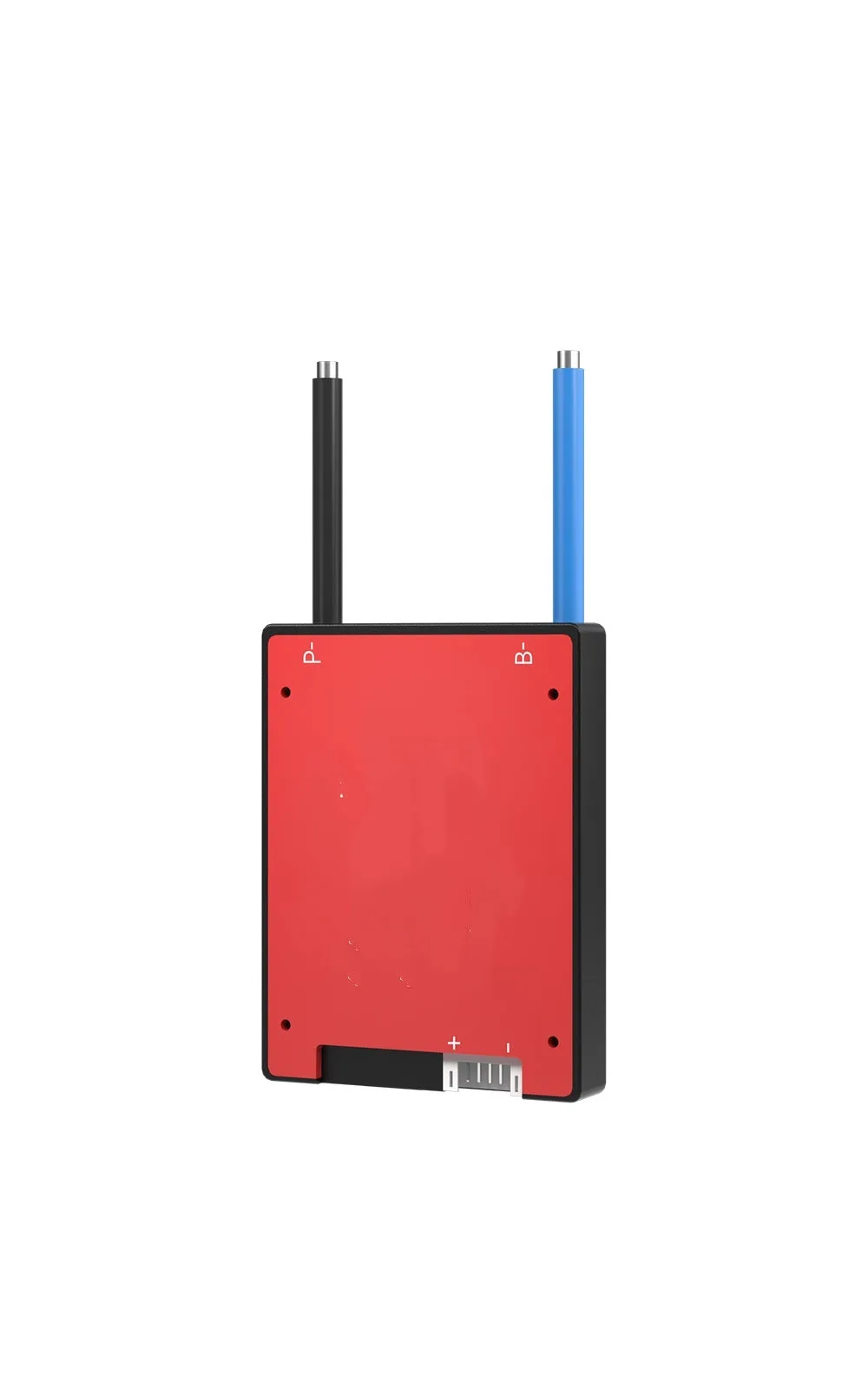
This BMS utilises a "same-port" design. This means the charge and discharge paths are combined into a single pair of main terminals (P+ and P-). This simplifies wiring compared to separate-port designs, as you only connect your charger and your load to these same two points. It offers a cleaner installation, especially beneficial for users new to BMS integration.
Application Suitability
The versatility in amp ratings makes this BMS suitable for a wide array of 12V LiFePO4 applications. Lower-current models (15A-40A) are ideal for small solar lights, security systems, or camping power boxes. Mid-range models (50A-150A) cover most caravan, marine, and home solar backup needs. The high-current models (200A-500A) are engineered for electric vehicles, golf carts, large off-grid solar systems, and industrial equipment where substantial power delivery is required.
Installation and Usage Guidance
Correct installation and model selection are critical for the BMS to function correctly and safely. The following points provide essential, low-risk guidance based on the product's stated design.
Correct Battery Chemistry and Configuration
This protection board is designed exclusively for use with lithium iron phosphate (LiFePO4) battery cells. It must not be used with other lithium-ion chemistries like NMC or LiPo, as their voltage characteristics and protection parameters differ. Furthermore, it is specifically for a 4S (four cells in series) configuration. Attempting to use it with a different number of series cells (e.g., 3S or 5S) will result in incorrect operation and potential failure.
Model Selection Based on Load
The most important purchasing decision is selecting the correct current (Amp) rating. Calculate the maximum continuous current your system will require. For example, divide the total wattage of your loads by the nominal battery voltage (12V). Always choose a BMS with a rating higher than this calculated figure to provide a safety margin and ensure longevity.
Thermal Management for High-Power Use
If you select a high-current model (80A+), opting for the version with an integrated fan is strongly advised. Even with a fan, ensure the BMS is mounted in a location with reasonable airflow and not enclosed in a sealed, hot space. For all models, avoid mounting directly on top of other heat-producing components. Proper thermal management ensures the BMS operates reliably at its full rated capacity.