
WIFI development board based on ESP-8266EX microcontroller with Arduino IDE compatibility, featuring 11 I/O pins, ADC input, OTA wireless upload capability, and integrated 5V 1A switching power supply supporting up to 24V input voltage in black colour


WIFI development board based on ESP-8266EX microcontroller with Arduino IDE compatibility, featuring 11 I/O pins, ADC input, OTA wireless upload capability, and integrated 5V 1A switching power supply supporting up to 24V input voltage in black colour
ESP-8266EX WIFI Development Board with Arduino Compatibility and OTA Wireless Upload
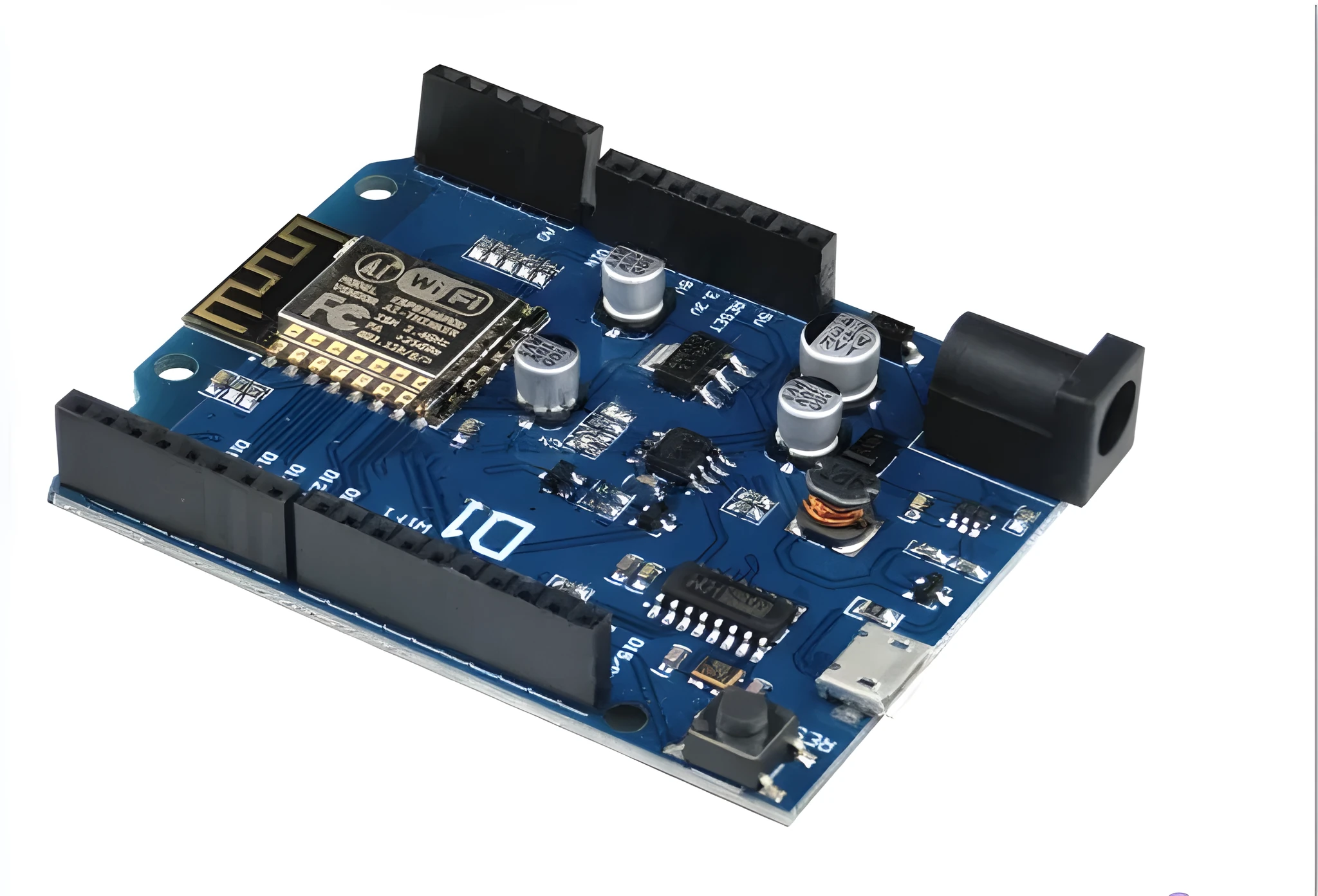
This WIFI development board provides microcontroller enthusiasts and IoT developers with a capable platform for wireless-connected projects. Based on the ESP-8266EX chipset, it delivers WIFI connectivity alongside Arduino IDE compatibility, creating a familiar development environment for those accustomed to Arduino ecosystems. The board integrates a 5V 1A switching power supply that accepts input voltages up to 24V, reducing the need for external power regulation components. With 11 digital I/O pins and one analogue input pin, it offers sufficient connectivity for sensors, displays, actuators, and other common electronic components in prototype applications.
Features and Construction

The board's core functionality centres around the ESP-8266EX microcontroller, which provides both processing capability and integrated WIFI connectivity. This combination allows the development board to serve as the foundation for Internet of Things projects, home automation systems, wireless sensors, and remote monitoring applications. The construction follows standard development board layouts with clearly labelled pinouts and accessible test points for debugging and measurement.
Material and Build
The development board utilises standard PCB manufacturing techniques with components appropriate for prototype and development work. The black PCB colour provides clear contrast for silkscreen labelling of pins and connections. All electronic components are surface-mounted using industry-standard practices for development boards of this category. The physical build prioritises accessibility to pins and ports over compactness, recognising that development boards require convenient connection points during prototyping phases.
Size and Practical Fit
The board dimensions follow standard development board form factors, allowing compatibility with common breadboards and prototyping shields. The spacing between connection pins matches standard 0.1 inch (2.54mm) prototyping grid patterns, enabling direct connection to solderless breadboards and standard header connectors. While exact measurements aren't specified in the source text, the board's design prioritises practical usability in development environments where easy access to pins and test points enhances workflow efficiency.
Uses and Placement
This development board suits various applications requiring wireless connectivity combined with microcontroller functionality. The Arduino IDE compatibility lowers the learning curve for those familiar with Arduino platforms, while the ESP-8266EX chipset provides professional-grade WIFI capabilities. From educational settings to professional prototyping, the board offers a balanced feature set for wireless IoT development without excessive complexity in setup or programming.
Event or Professional Use
In professional and educational environments, this board serves as a practical tool for developing proof-of-concept wireless devices. The OTA wireless upload capability allows remote firmware updates once devices are deployed, reducing the need for physical access during development cycles. The 24V maximum input voltage tolerance provides flexibility in industrial and automotive applications where higher voltage power sources are common. These features make the board suitable for prototyping wireless sensors, remote control systems, and data logging devices across various professional contexts.
Everyday Home Use
For hobbyists and home automation enthusiasts, this development board provides an accessible entry point into WIFI-connected projects. The Arduino compatibility means extensive community resources, tutorials, and code libraries can be utilised directly. Home automation projects like smart lighting controls, environmental monitors, security sensors, and appliance automation become feasible with this platform. The 5V 1A onboard power supply simplifies integration with common USB power sources and battery packs, while the 11 I/O pins offer sufficient connectivity for typical home automation components.
Benefits and Buying Value
This development board offers practical advantages through its integrated features and familiar development environment. The combination of WIFI connectivity, adequate I/O resources, and Arduino compatibility creates a versatile platform that reduces both development time and component count for wireless projects. By including essential functionality onboard rather than requiring external modules, it streamlines the prototyping process while maintaining flexibility for various applications.
Reuse and Low Maintenance
The board's design supports reuse across multiple projects through standard interfaces and reprogrammability. The OTA wireless upload capability reduces physical wear on USB connectors that occurs with frequent cable connections during development. The robust power supply accepting up to 24V input provides protection against voltage fluctuations in various environments. These characteristics extend the board's usable lifespan across prototyping cycles and reduce maintenance requirements during development and deployment phases.
Why Choose This Product
This WIFI development board provides a balanced feature set that addresses common requirements for wireless IoT development. The ESP-8266EX chipset delivers reliable WIFI connectivity while the Arduino IDE compatibility ensures accessible programming. The onboard 5V power supply eliminates the need for external voltage regulators in many applications, and the 11 I/O pins offer sufficient connectivity for typical sensor networks and control systems. For developers seeking wireless capability without abandoning familiar Arduino workflows, this board provides a practical solution with verified compatibility and adequate resources for most IoT prototyping scenarios.