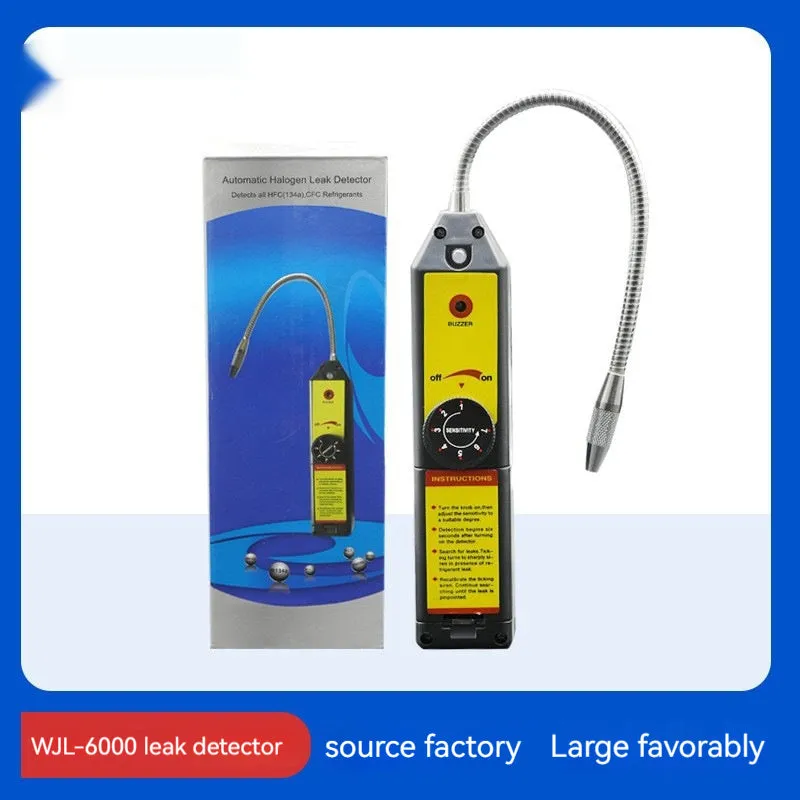
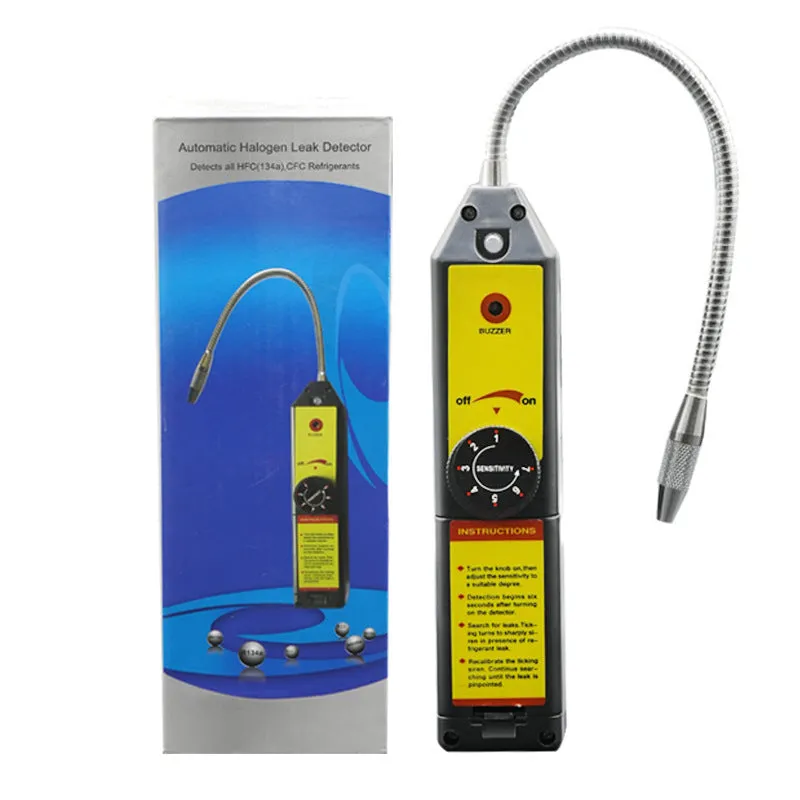
Halogen air tightness electronic car leak detector WJL-6000 for refrigerant leaks with 20cm probe, 50 hour battery life, 22.9x6.5x6.5cm size and high sensitivity 6gr/yr halogen refrigerant detection.


Halogen air tightness electronic car leak detector WJL-6000 for refrigerant leaks with 20cm probe, 50 hour battery life, 22.9x6.5x6.5cm size and high sensitivity 6gr/yr halogen refrigerant detection.
WJL-6000 Halogen Air Tightness Electronic Leak Detector for Car Refrigerant Systems
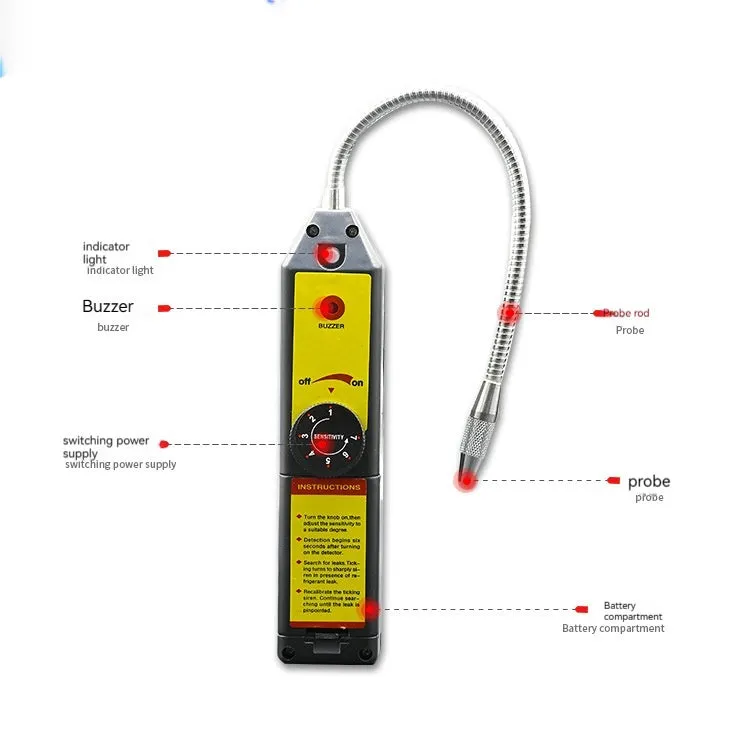
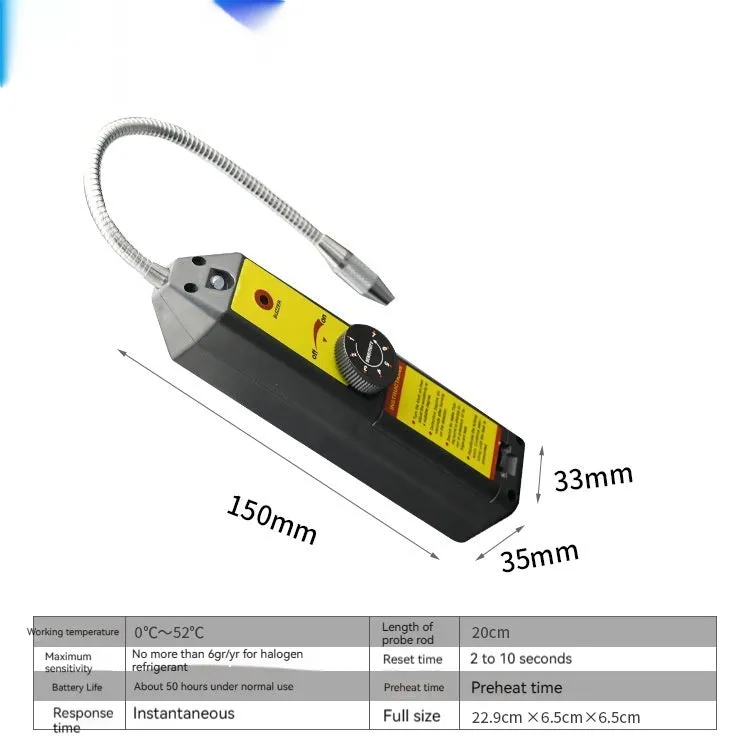
This WJL-6000 halogen air tightness electronic leak detector is a diagnostic tool engineered for automotive technicians and DIY mechanics. Its primary function is to identify leaks in systems containing chloro-halogen refrigerants, a common component in vehicle air conditioning units. With an instantaneous response time and a reset cycle of just 2 to 10 seconds, it facilitates rapid, successive checks during system troubleshooting. The device is designed for practical workshop use, offering approximately 50 hours of battery life under normal conditions and operating reliably within a temperature range of 0°C to 52°C. Its compact form, measuring 22.9cm by 6.5cm by 6.5cm, and inclusion of a storage bag make it easy to transport and store within a toolbox.
Features and Construction

The WJL-6000 detector is built around key specifications that define its performance and application. Its construction includes a 20cm probe, which extends its reach into engine bays and around complex piping.
Material and Build
The product description does not detail the specific materials used in the housing or probe construction. As an electronic handheld device, it incorporates a sensor calibrated for halogen gases, a battery power source, and control circuitry. The provided dimensions of 22.9cm x 6.5cm x 6.5cm indicate a handheld, rectangular form factor typical for professional-grade detectors.
Size and Practical Fit
The overall size of the detector and the 20cm probe length are central to its practical application. This size allows the unit to be held comfortably in one hand while manoeuvring the probe into tight spaces around condensers, compressors, and pipe joints. The probe's length is a critical differentiator, enabling inspections without needing to disassemble excessive components first, thereby saving time during diagnostics.
Uses and Placement
The detector's specified sensitivity and target refrigerants dictate its primary use cases. It is not a general-purpose gas leak detector but is specialised for a particular automotive application.
Event or Professional Use
In a professional automotive workshop setting, this detector is used for scheduled maintenance checks, post-repair verification of air conditioning system integrity, and fault diagnosis for cooling performance issues. The high maximum sensitivity of detecting no more than 6 grams per year of halogen refrigerant leak makes it suitable for identifying very small, slow leaks that could cause a gradual loss of system charge over time, which is essential for preventative maintenance.
Everyday Home Use
For the skilled DIY enthusiast working on personal vehicles, this detector offers a way to verify the seal of an air conditioning system after a component replacement or to diagnose the source of a slow leak before seeking professional repair. The long 50-hour battery life and straightforward operation (instantaneous response) support intermittent home garage use over many projects without frequent battery changes.
Benefits and Buying Value
The value of the WJL-6000 lies in its specific, measurable capabilities that translate directly to solving a clear technical problem.
Reuse and Low Maintenance
The detector is a reusable tool. Its long battery life reduces ongoing consumable costs and downtime for charging or replacement. The inclusion of a storage bag helps protect the unit and probe from damage when not in use, contributing to its longevity as a workshop asset. Maintenance is minimal, primarily involving battery replacement after the extensive 50-hour usage period.
Why Choose This Product
Choosing this specific detector is supported by its concrete specifications: the 6gr/yr sensitivity for halogen refrigerants targets the exact gases used in many car AC systems, the 20cm probe provides necessary reach, and the 0-52°C operating range ensures it functions in real-world garage environments. It offers a focused solution for a specific, high-intent search need—finding halogen refrigerant leaks in cars—backed by stated performance metrics rather than vague claims.